Bedtime Routine for Kids: What Works and Where the Story Fits
Build a calm bedtime routine for kids: what the studies found, a sample 30-minute plan, where the story goes, screens, and fixes when bedtime goes wrong.
By the MiniMinds team
On this page
- What is a bedtime routine?
- Why are bedtime routines important for children?
- When should you start a bedtime routine?
- What does a good bedtime routine look like?
- Where does the bedtime story go, and how long should it be?
- Should children use screens before bed?
- What should you do when bedtime goes wrong?
- When should you talk to a doctor about your child's sleep?
- Where does MiniMinds fit into a bedtime routine?
- Sources
A bedtime routine is the same short series of calm steps, in the same order each night, that tells a child sleep is coming. The American Academy of Pediatrics (AAP) boils it down to three: brush teeth, read a book, go to bed at a regular time. In young children, studies link a steady routine with falling asleep faster and waking less.
In short
- In a 2009 randomized trial of 405 families with children aged 7–36 months (sponsored by Johnson & Johnson), a nightly routine helped children fall asleep faster and wake less within three weeks.
- Across 10,085 young children in 13 countries, the more nights a week a routine happened, the better children slept; that survey shows a link, not proof.
- No guideline sets a length for the whole routine; for books, the AAP suggests 10–20 minutes at ages 2–3 and 20–30 minutes for preschoolers.
- The AAP advises switching screens off at least an hour before bed and keeping them out of the bedroom.
What is a bedtime routine?
A bedtime routine is a short, predictable sequence of the same calm activities, in the same order, ending with lights out at about the same time.
The AAP's Brush, Book, Bed is deliberately simple: brush teeth, read a favorite book (or two), get to bed at a regular time. "Having a predictable nighttime routine can help your child understand and learn to expect what comes next," it says.
A 2018 review by sleep researchers Jodi Mindell and Ariel Williamson groups the usual ingredients into four kinds: nutrition (a feed, a healthy snack), hygiene (bath, teeth), communication (reading, singing, lullabies) and physical contact (massage, cuddling, rocking). Türkiye's Child Neurology Society gives a similar list, says the routine should fit the individual child and family, and advises putting your child into bed while still awake, then leaving the room.
Why are bedtime routines important for children?
In babies and toddlers, starting a nightly routine improved sleep in randomized trials, often within days, and a large survey links routines with longer sleep. Most of the evidence is from children under 6, reported by mothers.
What the trials found
The best-known trial, published in Sleep in 2009, randomly assigned 405 mothers and their children aged 7–36 months to a routine or a control group for three weeks. The routine was a bath, a massage and quiet activities such as cuddling or singing a lullaby, with lights out within 30 minutes of the end of the bath. Children in the routine group fell asleep faster and woke less often and for shorter periods, and their mothers' mood improved too.
The authors could not say whether that particular routine made the difference or any routine would: good news if baths are a battle in your house.
A 2017 trial of 134 babies aged 8–18 months found the fastest improvement in the first three nights.
What the large survey found
A 2015 study asked mothers of 10,085 children up to age 5, in 13 countries from Canada and the UK to India and Japan, about their evenings. Children with a consistent routine went to bed earlier, fell asleep faster, woke less and slept longer. The link was "dose-dependent": more nights a week, better sleep. A survey shows an association, not proof of cause.
About the funding: the 2009 and 2015 studies were sponsored by Johnson & Johnson, and two authors of the 2017 trial were J&J employees. The findings are peer-reviewed, but you deserve to know.
A regular bedtime matters too
For school-age children, the stronger evidence is about a regular bedtime. Researchers using the UK Millennium Cohort Study followed 10,230 children, with bedtimes recorded at 3, 5 and 7. Seven-year-olds with irregular bedtimes had more behavioral difficulties, and those who switched to regular bedtimes improved clearly. It was observational, so it shows a link.
What the evidence does not show
- That routines raise language, bonding or IQ. The 2018 review suggests routines may help development beyond sleep but says more research is needed.
- That one routine works for every child. Nearly all the studies are in children up to 5.
When should you start a bedtime routine?
Start whenever you can keep it up every night; earlier is easier. The 2015 survey found better sleep the younger a routine began, and the AAP's page on books for 2- and 3-year-olds says routines "started when children are young will help prevent future bedtime struggles."
It is never too late: in the UK cohort, children who moved to regular bedtimes improved. With an older child, make the change together:
"From tonight we'll do the same three things every night: teeth, story, bed. You choose the story."
What does a good bedtime routine look like?
A good routine is short enough for your most tired night and ends in the bedroom with the calmest step. This sample of about 30 minutes is built on brush, book, bed. It is a practical suggestion, not a tested protocol.
| Time (8:00 p.m. lights out) | Step | Why |
|---|---|---|
| By 7:00 p.m. | Screens off and out of the bedroom | The AAP's one-hour rule |
| 7:30 | Snack if needed, bath or quick wash | A bath is optional |
| 7:35 | Pajamas, toilet, teeth | "Brush" |
| 7:40 | Story in bed, light low (10–20 minutes) | "Book," the calmest step |
| 7:55 | Quiet song, cuddle, the same goodnight words | A familiar ending |
| 8:00 | Lights out; leave while your child is awake | "Bed," at a regular time |
How long should a bedtime routine be?
About 20–30 minutes suits most families, but that is practical advice: no guideline or study sets a total length. The AAP suggests 10–20 minutes for books at ages 2–3 and 20–30 minutes for preschoolers. If your preschooler's reading runs long, start earlier rather than cutting the story.
Adjusting it by age
- Toddlers (2–3): fewer steps, lots of cuddling, the same book again.
- Preschoolers (4–5): small choices inside the routine: which pajamas, which of two books.
- School-age children (6–11): a chapter together; they can read a page to you.
- Weekends: Türkiye's Child Neurology Society advises similar sleep and wake times and routines on weekdays and weekends.
Where does the bedtime story go, and how long should it be?
Put the story near the end, after teeth and pajamas, in bed with the lights low, so the last thing before sleep is your voice and a book. For length, aim for the AAP's 10–20 minutes at ages 2–3 and 20–30 for preschoolers, TV off.
The NHS explains why calm matters then: "Too much excitement and stimulation just before bedtime can wake your child up again. Spend some time winding down and doing some calmer activities, like reading." The AAP agrees that active play before bed "may make your child too excited to sleep."
There is some evidence for the printed book in particular. In a survey of 2,334 Canadian fifth-graders, children who rarely read a printed book in the bedroom in the hour before sleep slept less, and less well, than their peers. That is a link, not proof.
The story matters beyond sleep, too. The AAP says even 15 minutes a day of reading aloud together "will help improve your child's language development and social-emotional skills." Our guide to why reading aloud to children matters goes deeper.
Choosing tonight's story
- Calm beats exciting. Save the chase scenes for the afternoon.
- Offer two, not twenty. "The fox or the moon?" is a real choice without a search.
- Repeats are fine. The AAP encourages sharing "the same book over and over and over again" with 2-year-olds.
- Match the age. What soothes a 3-year-old bores a 9-year-old; see choosing a bedtime story by age.
For tired nights, our 5-minute bedtime stories and calm stories for sleep are free to read or listen to. A song makes a natural last step; see lullabies and bedtime songs. For nights you are away, reading and recording stories in your own voice keeps the ritual going.
Should children use screens before bed?
Not in the last hour, if you can manage it. The AAP recommends keeping all screens out of children's bedrooms, especially at night, and turning them off at least 60 minutes before bedtime. Türkiye's Child Neurology Society says 1–2 hours.
- A 2015 systematic review of 67 studies found screen time linked with worse sleep, mainly shorter and later, in 90% of them; the authors note cause is not confirmed.
- A 2016 meta-analysis of 125,198 children (average age 14.5) found bedtime device use roughly doubled the odds of too little sleep. Even an unused device in the bedroom was linked with it.
- Content matters too. In a 2012 randomized trial with 565 children aged 3–5, swapping violent or age-inappropriate shows for educational, prosocial ones lowered the odds of any sleep problem.
What about night mode? None of the sources behind this guide tested blue-light filters in children, so the simplest rule is still the AAP's: off an hour before bed, charged outside the bedroom, yours included. For daily limits and a family media plan, see our guide to screen time and digital balance.
What should you do when bedtime goes wrong?
Stay calm, keep the routine and respond the same way each time. A 2006 American Academy of Sleep Medicine task-force review of 52 treatment studies in babies and young children found that 94% of the studies reported behavioral approaches worked, with over 80% of children improving in a way that lasted 3 to 6 months.
Stalling and calling out
The AAP's tips for toddler bedtime trouble include a quiet routine, the same bedtime and a comfort object, and advise against rewarding call-outs with visits: "children's main goal is to get you to appear." It also warns that "a negative response by a parent can sometimes make a sleep problem worse," so boring beats cross:
"It's sleep time. I love you. See you in the morning."
In one small trial, the Bedtime Pass, a card a child can swap for one visit or one trip out of the room, helped: among 19 children aged 3–6, those with the pass left their rooms and called out significantly less than controls.
"One more story"
Decide the number before you start and say it out loud, so the last page does the ending for you:
"Two books tonight, and you pick both. When the second one ends, it's lights out."
If a third appears, put it on top of the pile: "That one's first tomorrow." And try not to take the story away as a punishment.
Night-time fears and nightmares
Night fears are more common than parents think. In a study of 176 children aged 4–12, 73.3% reported them, more often at 7–9 than at 4–6, and parents markedly underestimated them. Almost 80% of the children linked their fear to negative information they had heard or seen, so scary content near bedtime may feed night-time worries in some children.
Nightmares tend to peak between ages 3 and 12, says the AAP. Comfort your child, let them tell you about it, and remind them dreams aren't real:
"That was a dream. Dreams aren't real, and you're safe."
Night waking
In the 2009 trial, night wakings fell in number and length. When your child wakes, keep visits brief, quiet and identical, with the same goodnight words.
When should you talk to a doctor about your child's sleep?
Talk to your pediatrician if your child snores or breathes loudly or heavily in their sleep, seems tired or unfocused in the day, or if bedtime battles and night waking continue despite a steady routine. The AAP's list of common sleep problems includes snoring, sleep apnea and loud or heavy breathing, and it notes that a child short of sleep may "zone out" at school.
Check your child's hours against the American Academy of Sleep Medicine's consensus: 10–13 hours at ages 3–5, naps included, and 9–12 at ages 6–12. Our guide to how many hours children should sleep has the full table.
Where does MiniMinds fit into a bedtime routine?
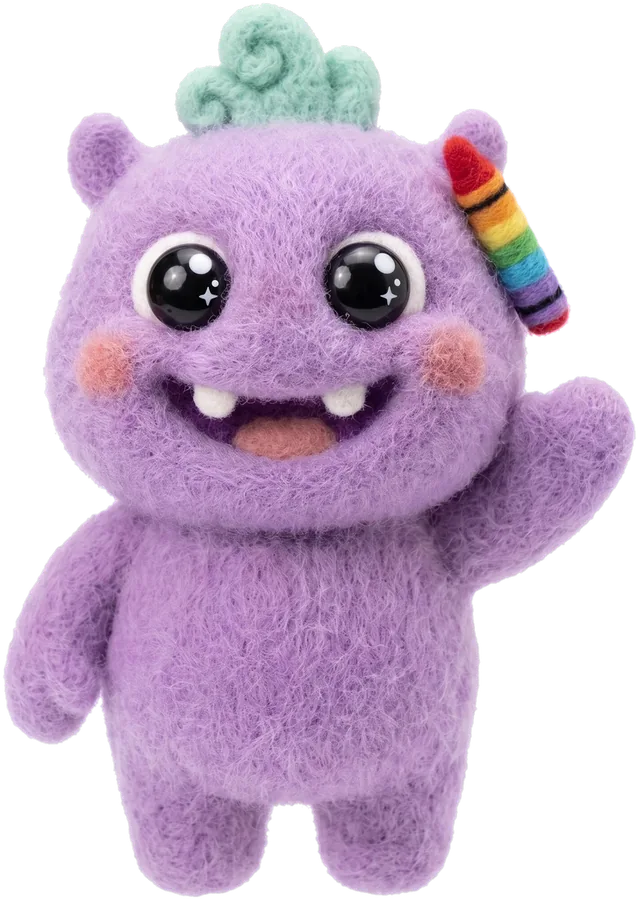
In MiniMinds, your child picks a hero, a world and a lesson, and Pofi, our purple felt storyteller, uses AI to write and illustrate a new story in minutes and reads it aloud, each word lighting up as it is spoken. You can record each chapter in your own voice. It runs on a screen, so the one-hour rule applies: make stories earlier in the evening and keep the last minutes for a book, a song and you. The free story library has thousands of stories families have shared.
Sources
- American Academy of Pediatrics (2024). Brush, Book, Bed: How to Structure Your Child's Nighttime Routine. HealthyChildren.org. link
- Mindell JA, Williamson AA (2018). Benefits of a bedtime routine in young children: Sleep, development, and beyond. Sleep Medicine Reviews. link
- Türkiye Çocuk Nörolojisi Derneği (undated). Çocuklarda Uyku İçin Öneriler (Sleep recommendations for children). link
- NHS (2025). Helping your baby to sleep. NHS. link
- Mindell JA et al. (2009). A nightly bedtime routine: impact on sleep in young children and maternal mood. Sleep. Sponsored by Johnson & Johnson. link
- Mindell JA et al. (2017). Implementation of a nightly bedtime routine: How quickly do things improve? Infant Behavior and Development. Two authors employed by J&J. link
- Mindell JA et al. (2015). Bedtime routines for young children: a dose-dependent association with sleep outcomes. Sleep. Sponsored by J&J. link
- Kelly Y, Kelly J, Sacker A (2013). Changes in bedtime schedules and behavioral difficulties in 7 year old children. Pediatrics. link
- American Academy of Pediatrics (2021). How to Share Books with Children 2 and 3 Years Old. HealthyChildren.org. link
- American Academy of Pediatrics (2013). How to Share Books with Your Preschooler. HealthyChildren.org. link
- Dube N et al. (2017). The use of entertainment and communication technologies before sleep could affect sleep and weight status. International Journal of Behavioral Nutrition and Physical Activity. link
- American Academy of Pediatrics (2026). Healthy Sleep Habits: How Many Hours Does Your Child Need? HealthyChildren.org. link
- Hale L, Guan S (2015). Screen time and sleep among school-aged children and adolescents: a systematic literature review. Sleep Medicine Reviews. link
- Carter B et al. (2016). Association Between Portable Screen-Based Media Device Access or Use and Sleep Outcomes. JAMA Pediatrics. link
- Garrison MM, Christakis DA (2012). The impact of a healthy media use intervention on sleep in preschool children. Pediatrics. link
- Mindell JA et al. (2006). Behavioral treatment of bedtime problems and night wakings in infants and young children. Sleep. link
- American Academy of Pediatrics (2022). Toddler Bedtime Trouble: 7 Tips for Parents. HealthyChildren.org. link
- Moore BA et al. (2007). Evaluating the Bedtime Pass Program for child resistance to bedtime: a randomized, controlled trial. Journal of Pediatric Psychology. link
- Muris P et al. (2001). Children's nighttime fears: parent-child ratings of frequency, content, origins, coping behaviors and severity. Behaviour Research and Therapy. link
- American Academy of Pediatrics (2023). Nightmares, Night Terrors & Sleepwalking in Children: How Parents Can Help. HealthyChildren.org. link
- Paruthi S et al. (2016). Recommended Amount of Sleep for Pediatric Populations: A Consensus Statement of the American Academy of Sleep Medicine. Journal of Clinical Sleep Medicine. link